

Traditional PRP Systems vs. ExoCube™: beyond platelet concentration
As regenerative medicine continues to evolve, platelet-rich plasma (PRP) has become one of the most widely used autologous biologic therapies. Conventional PRP systems are designed to separate and concentrate platelets from whole blood, providing a practical and well-established method for delivering platelet-derived growth factors to target tissues.
However, platelet concentration represents only one component of the biological environment involved in tissue repair.
While platelets are important reservoirs of growth factors and regenerative mediators, tissue repair involves a complex network of platelet-derived mediators, plasma-derived regulatory proteins, cytokines, soluble signaling molecules, and naturally occurring extracellular vesicle (EV)-sized particles. This broader collection of bioactive molecules is commonly referred to as the autologous secretome. [4,5,7,9]
Traditional PRP systems are designed to concentrate platelets.
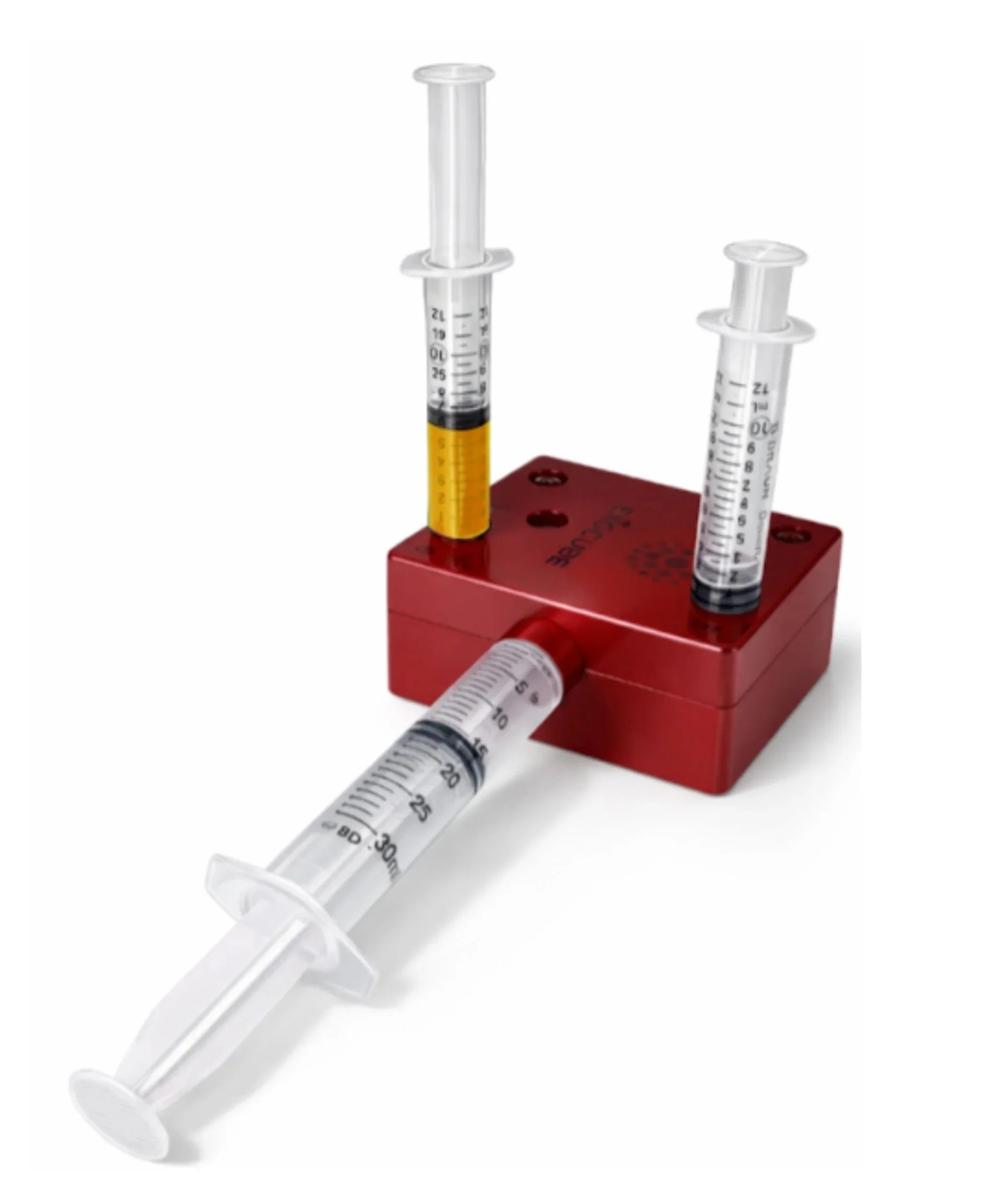
ExoCube™ follows a different biological and processing strategy designed to activate, filter, and concentrate a broader autologous secretome.
Traditional PRP Systems
Traditional PRP systems are designed with a single primary objective: preparing platelet-rich plasma by concentrating platelets through centrifugation.
Depending on the system, the final PRP may be leukocyte-poor or leukocyte-rich, low-volume or high-volume, moderately concentrated or highly concentrated. Comparative studies have demonstrated considerable variability among commercial systems in platelet concentration, leukocyte content, red blood cell contamination, cytokine profiles, and growth factor composition. [2,3,6]
While highly effective for platelet enrichment, the final biological composition of PRP can vary depending on patient baseline values, blood draw volume, centrifugation protocol, leukocyte content, activation method, and collection technique. [1,2,3,6] Conventional PRP systems are not designed to concentrate the broader plasma secretome beyond the platelet-rich fraction.
Platelet-rich ≠ Secretome-rich
ExoCube™: A Next-Generation Biological Strategy
ExoCube™ is not simply another platelet-concentrating PRP system.
Rather than focusing solely on platelet enrichment, ExoCube™ integrates platelet activation, filtration, and concentration within a standardized, closed workflow. The objective is not simply to produce platelet-rich plasma, but to increase the deliverable autologous biological payload obtained from blood-derived plasma. [7,8]
The resulting biological payload is designed to include not only platelet-derived growth factors, but also plasma-derived regulatory proteins, soluble cytokines, signaling molecules, and naturally occurring extracellular vesicle-sized particles. [7,8,9]
Why the Difference Matters
PRP-focused systems remain valuable tools in regenerative medicine. They provide a practical method for preparing autologous platelet-rich plasma from whole blood, with strengths in platelet enrichment, ease of use, and compatibility with point-of-care clinical workflows.
However, their biological scope is mainly defined by the platelet-rich fraction.
ExoCube™ aims to move beyond platelet concentration alone by focusing on the broader secretome. This may be especially relevant in biological environments where tissue repair requires more than growth factor release. Inflammation control, matrix protection, angiogenesis, cellular migration, immune modulation, and extracellular matrix remodeling are coordinated by multiple mediators acting together. [4,5,7,9,10]
For example, platelet-derived growth factors may support cell proliferation and angiogenesis, while plasma-derived regulatory proteins such as alpha-2-macroglobulin may contribute to anti-catabolic activity by inhibiting tissue-degrading enzymes. [10] Other mediators, including HGF, IGF, and IRAP, may support tissue repair, cell survival, and modulation of inflammatory pathways. [4,5]
In this context, a broader concentrated secretome may provide a more complex biological signal than platelet concentration alone.
Citations
04/21/2026